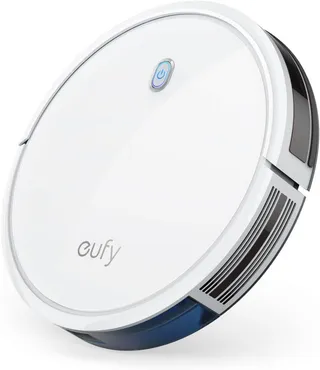
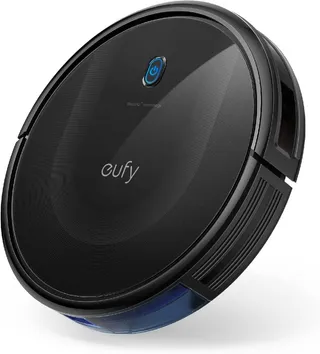
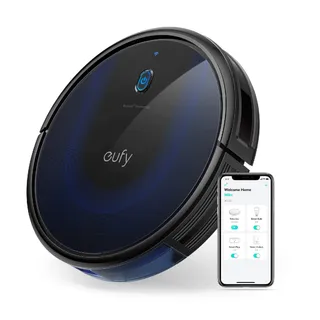
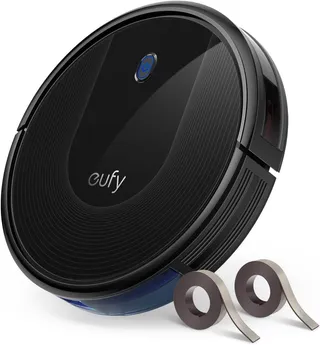
Eufy RoboVac G20
Suction
2,500 Pa
Battery
90 min
Navigation
Gyroscope & Floor Tracking
Full Specifications
| Suction Power | 2,500 Pa |
| Battery Life | 90 min |
| Dustbin Capacity | 600 ml |
| Navigation | Gyroscope & Floor Tracking |
| Robot Height | 2.85" |
| Threshold Climbing | 15 mm |
| Brush Roll | Single |
| Mopping | No |
| Self-Empty Dock | No |
| Obstacle Avoidance | No |
| Carpet Boost | Yes |
| HEPA Filter | Yes |
| WiFi | 2.4 GHz |
| Voice Assistants | Alexa |
| Warranty | 1 year |
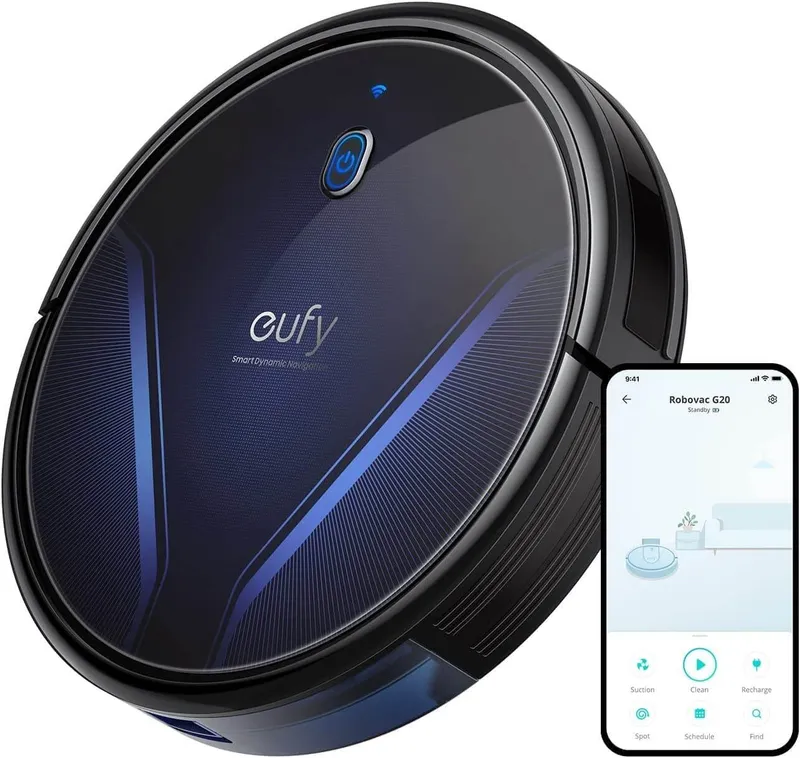
Eufy RoboVac G20: A Budget Robot Vacuum That Punches Above Its Weight
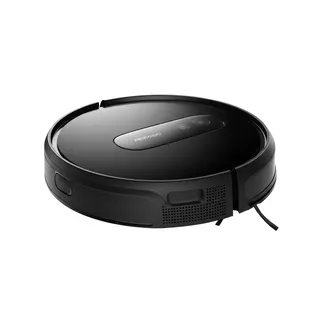
The Eufy RoboVac G20 stands just 2.85 inches tall—slim enough to slip under couches and beds that block most robot vacuums. That glossy black tempered-glass top with the blue Wi-Fi indicator gives it a premium look that belies its budget price tag. And at around 55 dB on standard power, you can have a phone conversation in the same room while it works.
What You Need to Know Before Buying
The G20 hit the market in early 2022 and remains available in North America, Europe, and Asia through official Eufy stores and major retailers like Amazon and Best Buy. It launched at $279.99 for the standard vacuum-only model and $319.99 for the G20 Hybrid, which adds mopping capability.
Here’s where it gets interesting: those prices have dropped significantly. During sales, the G20 has dipped as low as $129.99. Typical 2024-2025 pricing hovers around $150-$220 for the standard version and $180-$250 for the Hybrid.
The robot measures 12.8 x 12.8 inches with that remarkably low 2.85-inch profile. It weighs about 6 pounds—light enough to carry between floors. Two versions exist: the standard G20 (vacuum only) and the G20 Hybrid (vacuum plus mop). Beyond the added water tank and mop pad, specs are identical.
One word of caution: buy from authorized sellers. Eufy’s 12-month warranty and customer support only apply to units purchased through official channels. Gray-market imports might save a few dollars but could leave you without recourse if something goes wrong.
Hardware That Gets the Job Done
Suction and Cleaning Power
The G20 delivers 2,500 Pa of maximum suction in Turbo mode—roughly double what you’d get from Eufy’s older 11S. Independent testing measured about 13.4 CFM airflow at the vacuum inlet, which translates to strong pickup for a budget robot. You might encounter inflated specs online claiming 18,000 Pa. That’s simply wrong; no robot vacuum operates at those levels.
Brush System
A single main brushroll (about 5.7 inches wide) combines spiral bristles with rubber fins to handle both hard floors and carpets effectively. One side brush sweeps debris from edges and corners. Fair warning: long hair wraps around the brushroll. There’s no anti-tangle mechanism, so expect to cut away hair regularly. The included cleaning tool with its built-in blade makes quick work of this maintenance task.
Dustbin Capacity
The standard G20 holds 600 mL of debris; the Hybrid version shrinks to 450 mL to make room for the water reservoir. Some third-party listings incorrectly claim a 1-liter bin—that’s false. Lab tests found the usable volume even smaller (around 0.25 L) before overflow, so emptying after every run is smart practice. There’s no fill sensor to warn you when the bin is full.
Filtration
Eufy advertises a “high-performance triple-layer filter,” and it does capture most household dust. However, it’s not a true HEPA filter. Allergy sufferers should know that the finest particles may escape. The filter is washable—rinse under cold water and air dry completely before reinstalling.
Sensors and Navigation
Thirteen sensors work together: infrared drop sensors for stairs, a bumper with impact sensors, plus an internal gyroscope and accelerometer. What the G20 doesn’t have matters too—no LiDAR, no front-facing camera, no AI object recognition. Claims of “128 object recognition” for this model are misinformation.
The robot uses “Smart Dynamic Navigation,” cleaning in methodical zigzag patterns rather than bouncing randomly. It divides spaces into sections and covers them systematically. However, it doesn’t create or save maps. Each cleaning session starts fresh, and the app shows no live map of its progress.
Battery Life
A 14.4V lithium-ion battery (2,600 mAh) powers the G20. Eufy claims 90-100 minutes per charge, which independent tests largely confirm. On the lowest “Quiet” setting, one test measured 144 minutes; on maximum power, expect around 45-50 minutes. Claims of 180-minute runtime are inaccurate—that’s a different model’s spec.
Charging takes about 5-6 hours from empty. The G20 supports recharge-and-resume: when battery runs low during cleaning, it returns to base, charges to about 80%, then picks up where it left off.
Getting Around Your Home
Threshold climbing tops out around 15-20 mm (0.6-0.8 inches). Some listings mistakenly repeated the height spec as climbing ability—the G20 definitely cannot scale 2.85-inch obstacles. Door saddles and standard rug edges pose no problem, but anything taller than an inch will likely stop it.
Noise levels are genuinely impressive. At maximum power on hard floors, tests measured 60-61 dB. On carpet, sound drops to around 55 dB or less. One reviewer recorded just 52 dB on standard mode in a real home. You can run this vacuum while watching TV without raising the volume.
Mopping with the G20 Hybrid
Skip this section if you have the standard vacuum-only G20.
The Hybrid model clips a mopping module onto its underside, adding a 130 mL water tank and a microfiber mop pad. This is passive mopping—water seeps through small outlets onto the pad via capillary action. No pump, no electronic controls.
What it does well: freshening floors, picking up fine dust, removing footprints and light marks. What it won’t handle: dried sauces, mud, or anything requiring actual scrubbing. Think of it as an automated damp cloth rather than a replacement for real mopping.
The system has no carpet detection. If you drive the Hybrid onto a rug with the mop attached, water will dampen your carpet. Remove the mopping module for carpeted areas, or use boundary strips to keep it on hard floors during mop runs.
Unlike high-end competitors, there’s no mop-lift feature. The pad doesn’t raise off the floor—it’s fixed in place. The 130 mL tank typically lasts 45-60 minutes of mopping. After each use, wash the microfiber pad (hand or gentle machine cycle) and empty any remaining water to prevent mildew.
App Features and Smart Home Integration
The Eufy Clean App
The G20 connects through the Eufy Clean app (formerly EufyHome), available free on iOS and Android. You’ll need a Eufy account and a 2.4 GHz Wi-Fi network—5 GHz isn’t supported. Once connected, you can control the vacuum from anywhere.
Four suction modes are available: Quiet, Standard, Turbo, and Max. The BoostIQ feature automatically increases power when the robot detects carpet. Spot Clean mode makes the G20 spiral in place for about two minutes to intensively clean a small area. A hidden Manual Steering control lets you drive the robot with on-screen arrows, though users report it’s somewhat clunky.
What’s Missing
The G20 doesn’t generate visible maps. That means no room naming, no selecting specific rooms to clean, and no drawing virtual no-go zones. Each cleaning run is treated as completely fresh. If you need those features, you’ll need to step up to a more expensive model with LiDAR or camera navigation.
Scheduling works but stays basic—you can set automatic cleaning times, but you can’t schedule different rooms or zones since there’s no map. There’s no Do Not Disturb mode, though the quiet operation makes nighttime runs feasible anyway.
Voice Control
Amazon Alexa and Google Assistant both work with the G20. Link your Eufy account through the relevant skill, and you can start, stop, pause cleaning, or send the robot home with voice commands. HomeKit and Siri Shortcuts aren’t supported.
App Reliability
The Eufy Clean app earns strong ratings: 4.7/5 on the iOS App Store and approximately 4.5/5 on Google Play. Most users find it straightforward and stable. Common complaints involve initial Wi-Fi connection difficulties (especially with mesh routers) and the lack of a precise battery percentage display—just a vague icon.
The Charging Dock
What you get is refreshingly simple: a compact charging base with two metal contact pins. No auto-emptying, no water refilling, no fancy features—it just charges the robot.
The dock measures about 6.5 x 6.0 x 3.14 inches, small enough to tuck into tight spaces. An LED indicates power status. The base emits an infrared signal to help the G20 find its way home when cleaning finishes or battery runs low.
Placement matters. Put it on a hard, flat floor against a wall with roughly 3 feet of clearance in front and 2 feet on each side. Keep it out of direct sunlight, which can interfere with the IR sensors.
Replacement Parts and Ongoing Costs
What’s in the Box
Beyond the robot and charging base, you’ll find the AC power adapter, one side brush (some packages include a spare), two filters (one pre-installed, one extra), the main brushroll with brush guard, five cable ties for cord management, a cleaning tool with cutter blade, and the user manual. The Hybrid version adds the mopping module, washable mop cloth, and water outlet filters.
Maintenance Schedule
Eufy recommends replacing filters every 6 months or 50 cleaning cycles, side brushes every 3-6 months, and the main brushroll every 6-12 months depending on wear. Many users stretch these intervals, especially for the main brush. If you have pets or run daily, filters may need more frequent attention.
Replacement Costs
Official Eufy replacement kits bundle consumables together—typically 2 filters, 4 side brushes, 1 main brushroll, and 1 brush guard for around $30. Third-party alternatives run $15-20 for larger packs. Quality varies with off-brand parts, but many users find them adequate for disposable components.
The battery is replaceable, though you’ll need to unscrew the bottom panel. Expect $30-50 for a replacement battery pack. Annual maintenance runs roughly $30 with official parts or $15 with third-party alternatives.
Keeping the G20 Running
Regular Maintenance Tasks
Empty the dustbin after every run—without a fill sensor, an overfull bin will leave debris trails. Tap dust from the filter weekly, or more often with pets. Check the brushroll weekly for hair tangles, using the included cutter tool to slice through wound hair at the bearings.
The side brush collects less debris but still needs occasional attention. Every couple of weeks, inspect the wheels for thread or hair around the axles. The front caster wheel pops out for cleaning—hair accumulates there and can cause navigation problems if ignored.
Wipe cliff sensors with a dry cloth occasionally. If the robot starts stopping at floor edges it used to cross, dirty sensors might be misreading dark floors as drops. Keep charging contacts clean with a dry cloth to prevent oxidation.
Common Issues and Fixes
Brushroll stuck errors: Hair or string jams the brush, or something like a sock gets sucked in. Remove the obstruction and clean the brush.
Wheel stuck errors: Usually caused by string around the axle or the robot caught on an obstacle. Clean the wheels.
Bumper stuck: Debris in the bumper mechanism can cause constant obstacle triggers. The fix involves opening and cleaning it—a few screws and some DIY effort.
Battery degradation: After a year or two, you might notice shorter runtime. Normal for lithium-ion batteries. The battery is replaceable.
Wi-Fi connectivity: Initial connection can be finicky, especially with complex network setups. Once connected, it’s stable.
Build Quality and Lifespan
The G20 is solidly built for a budget vacuum. The chassis handles daily bumping without cracking, and the tempered glass top resists scratches better than plastic covers on older models. With proper maintenance—regular cleaning, timely consumable replacement, and perhaps one battery swap—expect 3-5 years of service. Many Eufy vacuums run significantly longer.
Warranty and Customer Support
Eufy backs the G20 with a 12-month limited warranty (EU countries may get 2 years under consumer protection laws). This covers manufacturing defects and hardware failures under normal use.
Eufy’s customer support reputation is excellent. Users frequently describe prompt email responses, friendly service, and quick resolutions—often receiving replacement units or parts without excessive hassle. Contact options include email ([email protected]), phone (800-994-3056 for US), and live chat on the Eufy website during business hours.
If buying from Eufy directly, you get a 30-day unconditional return window. Retailers like Amazon typically offer similar return policies.
Real-World Cleaning Performance
Hard Floors
This is where the G20 shines. Independent tests showed 96-99% debris pickup on hard floors in a single pass. Dust, crumbs, grit, pet hair, and even larger items like rice or cereal get sucked up efficiently. The side brush occasionally scatters larger debris initially, but the vacuum catches everything eventually. Edge cleaning is strong, and the robot angles itself into corners—though the innermost corner of any 90-degree angle remains slightly out of reach for round robots.
Low-Pile Carpet
Performance drops on carpet. Tests measured about 25% pickup of fine particles like baking soda on low-pile carpet, with better results (around 47%) for larger debris like sand. Surface dirt, visible crumbs, and pet hair get handled adequately, but deep cleaning of embedded dirt isn’t the G20’s strength. BoostIQ helps by automatically increasing suction on carpet, but this remains a maintenance tool rather than a deep cleaner.
High-Pile Carpet
Thick carpets challenge the G20 further. It can climb onto high-pile rugs (if they’re not too soft and sink-y), and BoostIQ kicks in for maximum suction. Test results showed around 32% pickup of fine debris and 53% of larger particles. Surface-level dirt gets removed, but the carpet won’t feel as deeply cleaned as with a powerful upright vacuum. Very plush carpeting might also slow the robot down or cause it to treat the surface almost like an obstacle.
Pet Hair
On hard floors, pet hair practically gets magnetized into the dustbin. Tests showed 80% pickup on hard surfaces. Carpet performance dropped to 59-60%—still respectable, but some hair stays tangled in carpet fibers. The bigger issue is maintenance: hair wraps around the brushroll and side brush, requiring frequent cleaning to prevent motor strain.
Edge and Corner Cleaning
The side brush effectively pulls dirt from baseboards and wall edges. Corners present the typical round-robot limitation—expect a small triangular area in tight 90-degree corners that the G20 can’t reach. Occasional manual touch-ups address this.
Navigation and Obstacle Handling
How It Moves
The G20 cleans in approximately 4m x 4m zones, moving in a Z-pattern: straight lines until it hits an obstacle, then turns and continues. Compared to random-bouncing robots, this systematic approach dramatically reduces missed spots. Without a stored map, however, it might revisit some areas or tackle rooms in odd sequences. Let it complete its full cycle for best results.
Room-to-Room Movement
Since there’s no map memory, the G20 doesn’t “know” where rooms are or where doorways lead. It simply wanders through open doors during cleaning. You might watch it clean half the living room, head down a hallway to a bedroom, then return. Eventually it covers everything accessible, but the route won’t be logical to human observers.
Bumping and Object Detection
Without a front camera or laser, the G20 detects obstacles by touch and basic infrared sensing. It will bump into furniture—that’s normal operation. The spring-loaded, padded bumper keeps impacts gentle. Lightweight pieces like small plant stands might get nudged. Sturdy furniture handles it fine. The robot does slow down when infrared sensors detect walls, but slim objects like chair legs might not register until contact.
Dealing with Cables and Clutter
Cables are the enemy. Phone chargers, lamp wires, shoelaces—anything thin and loose risks getting sucked in or tangled around the brush. The included cable ties aren’t just for cord organization; they’re a hint to secure loose wires before cleaning. Socks, underwear, and light fabric can also cause problems. Robot-proof your floors before running the G20.
Returning to Base
This is the G20’s weakest point. Without a stored map, it uses a homing algorithm to find the dock—which works fine if it’s in the same room or nearby. From farther away, the robot often struggles. Multiple reviewers reported the G20 failing to return to base from distant rooms, sometimes wandering until the battery died. Complex layouts with many obstacles make this worse.
For small to medium homes with simple layouts, docking usually works. Larger or more complicated spaces may require running the robot in sections or manually placing it back on the charger if you find it stranded.
Climbing and Clearance
The G20 handles most door thresholds and rug transitions easily. Its 15-20mm climbing ability covers typical interior obstacles. Dark floors can occasionally fool the infrared cliff sensors into thinking there’s a drop—if the robot refuses to cross a very dark rug, that’s why.
Stairs are safe. The cliff sensors work reliably to prevent falls, even on split-level landings.
For Pet Owners
The Good News
That 55 dB noise level helps pets adjust. Many owners report their dogs and cats barely react to the G20, especially compared to louder traditional vacuums. The daily or every-other-day fur removal dramatically reduces hair tumbleweeds and keeps floors cleaner. Cat owners particularly appreciate the robot picking up scattered litter around litter boxes.
The Maintenance Reality
Pet hair wraps around brushes. Long dog hair is especially problematic. Plan to clean the brushroll after every 2-3 runs in heavy-shedding households. The included tool makes this a 1-2 minute job, but it’s unavoidable with pets.
The Important Warning
The G20 has no visual sensor to detect pet waste. If your dog or cat has an accident, the robot will roll through it and spread the mess—the dreaded “poopocalypse.” With pets that aren’t fully reliable, supervise initial runs or restrict access to areas where accidents might occur.
Allergies
No HEPA filter means some fine dander escapes back into the air. The G20 still reduces overall allergen levels by removing hair and dander into its bin, but severe allergy sufferers should empty the dustbin outside and might want to consider models with sealed HEPA filtration.
Is Your Home a Good Fit?
The G20 works best in small to medium homes—apartments, condos, or single-floor houses up to about 1,200 square feet. Open floor plans suit it particularly well. Multiple rooms work fine as long as you keep doors open and the layout isn’t too complex.
For larger homes (2,000+ square feet), the battery might require mid-cleaning recharges, and the navigation limitations become more apparent. You can work around this by cleaning in sections or manually deploying the robot to different areas.
That 2.85-inch height means the G20 fits under furniture that blocks taller robots—a genuine advantage for cleaning under sofas, beds, and low cabinets. Check your furniture clearances; anything under 3 inches might cause the robot to wedge underneath.
Very cluttered spaces aren’t ideal. The more obstacles, the more bumping and the less predictable the coverage. Extremely high-pile carpet also poses challenges—the G20 works best on hard floors with low to medium pile rugs.
How It Stacks Up Against the Competition
At current sale prices ($150-200), the G20 offers exceptional value. It substantially outperforms Eufy’s older random-navigation models (11S, 15C, 25C) with systematic cleaning and double the suction.
Compared to the Wyze Robot Vacuum at similar prices, you trade mapping and virtual no-go zones for a slimmer profile, quieter operation, and potentially fewer software quirks. The Wyze offers more features; the G20 offers more reliability.
Against Roomba’s 600 series, the G20 cleans faster and more efficiently thanks to its systematic navigation, runs much quieter, and typically costs less.
Strengths worth highlighting:
- Exceptionally quiet operation (rare at this price)
- Ultra-slim design gets under furniture others can’t reach
- Strong suction for the price, especially on hard floors
- Systematic cleaning pattern saves time compared to random bouncers
- Easy app with scheduling and voice control
- Solid build quality with attractive design
- Excellent customer support from Anker/Eufy
Limitations to accept:
- No floor mapping or room-specific cleaning
- Sometimes fails to return to dock from far away
- Small dustbin requires frequent emptying
- Only surface-cleans thick carpets
- No HEPA filter for allergy sufferers
- Will tangle on cables and won’t avoid small hazards
- Manual maintenance required (no auto-empty features)
Known Issues and Limitations
Common Complaints
Users most frequently mention:
- Difficulty finding the charging base in complex layouts
- Small dustbin filling quickly with pet hair
- Disappointment when realizing there’s no mapping feature
- Occasional stuck situations on transitional surfaces or furniture
Misleading Specs to Ignore
Some online listings contain errors:
- 18,000 Pa suction (false—it’s 2,500 Pa)
- 1,000 mL dustbin (false—it’s 450-600 mL)
- 2.85-inch climbing ability (false—it’s about 0.6 inches)
- 180-minute runtime (false—maximum is around 144 minutes on lowest power)
What to Expect
The G20’s limitations stem from design trade-offs, not defects. It lacks the mapping and advanced features of premium robots because those features cost more. Within its category, it performs well and has no widespread hardware failures or critical bugs. Users who understand its limitations going in tend to be quite satisfied.