Eufy RoboVac L70 Hybrid
Suction
2,200 Pa
Battery
150 min
Navigation
Spinning Lidar
Mopping
1 Fixed Pad
Full Specifications
| Suction Power | 2,200 Pa |
| Battery Life | 150 min |
| Dustbin Capacity | 450 ml |
| Navigation | Spinning Lidar |
| Robot Height | 4" |
| Threshold Climbing | 20 mm |
| Brush Roll | Single |
| Mopping | 1 Fixed Pad |
| Self-Empty Dock | No |
| Obstacle Avoidance | No |
| No-Go Zones | Yes |
| Carpet Boost | Yes |
| HEPA Filter | Yes |
| WiFi | 2.4 GHz |
| Voice Assistants | Alexa |
| Warranty | 1 year |
Compare with similar models:
The Eufy RoboVac L70 Hybrid made a splash when it launched in 2019 as the brand’s first laser-guided robot vacuum. For around $550, buyers got something Eufy hadn’t offered before: genuine LiDAR navigation, intelligent mapping, and 2-in-1 vacuuming and mopping. Six years later, you can often snag one refurbished for under $200, which raises an obvious question: does this aging model still deserve a spot in your home?
The short answer is yes, with caveats. The L70 delivers surprisingly strong cleaning performance and smart navigation that holds up against many newer budget robots. But it lacks features that have become standard on premium models, like multi-floor mapping, obstacle recognition cameras, and self-emptying bases. Whether those trade-offs matter depends entirely on your living situation.
Design and Build
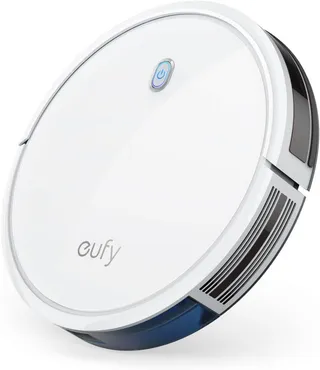
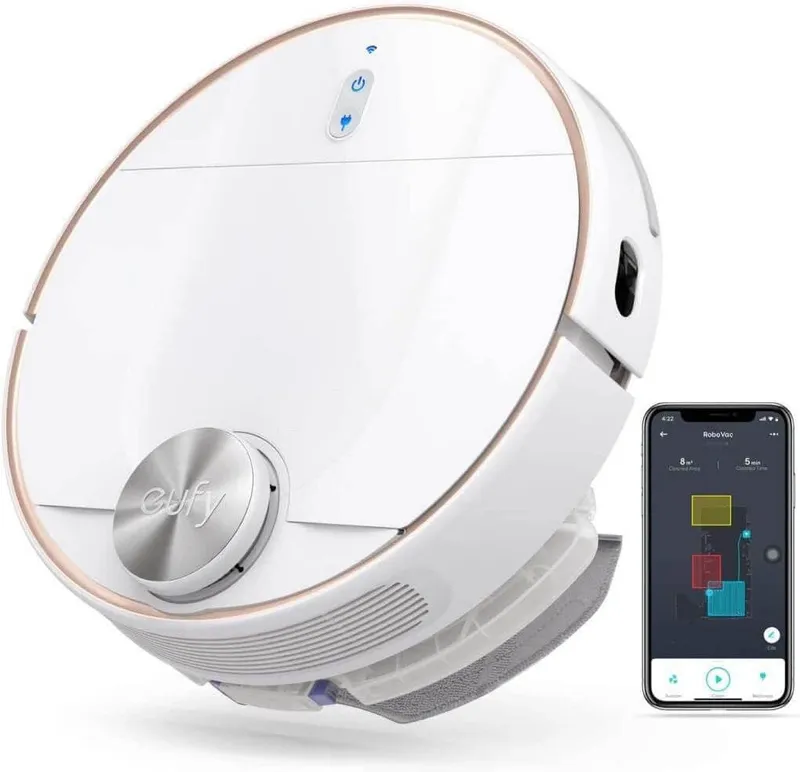
The L70 wears the classic round robot vacuum shape in matte white, topped with a silver LiDAR turret that gives it a distinctive look. At 14 inches in diameter and 4 inches tall, it’s sized similarly to most LiDAR-equipped competitors. That height lets it slide under most sofas and beds, though particularly low-clearance furniture will block it.
The build quality feels solid. Unlike some earlier Eufy models with glossy tops prone to scratches, the L70’s matte finish holds up well. At about 8.5 pounds, it’s substantial enough to feel well-made but not so heavy that carrying it between floors becomes a chore.
Everything you need comes in the box: the robot, charging base with adapter, a waterproof docking mat for mopping sessions, the detachable mopping module with a washable microfiber cloth, and documentation. No physical remote is included since control happens through the smartphone app or voice assistants.
Navigation and Mapping
Here’s where the L70 genuinely shines. The LiDAR-based navigation system creates detailed floor maps and plans efficient cleaning routes in neat S-shaped rows rather than the random bouncing of cheaper robots. Watch it work and you’ll see it methodically cover each area before moving to the next, rarely missing spots or wasting time on redundant passes.
The live mapping in the app shows exactly where the robot is and what it’s cleaned. You can draw no-go zones to keep it away from pet bowls, cluttered play areas, or delicate furniture. Zone cleaning lets you direct it to a specific area on demand, though you’ll need to draw these zones fresh each time rather than saving them.
What you won’t get is automatic room recognition. The L70 doesn’t partition maps into named rooms, so you can’t just tap “kitchen” and send it there. This was less common when the L70 launched, but most mapping robots released after 2020 include this feature.
The biggest limitation? Single-map memory. The L70 saves only one floor plan. Move it upstairs and start cleaning, and it overwrites your downstairs map. For single-floor homes this is fine. For multi-story houses, it’s a dealbreaker unless you’re willing to remap each time you switch floors.
Cleaning Performance
On hard floors, the L70 is outstanding. The 2200 Pa suction pulls up fine dust, crumbs, sand, and larger debris with little trouble. One lab test found it averaging about 75 grams of dirt collected per week, comparable to manual weekly vacuuming. Owners consistently report floors feeling as clean as if they’d swept by hand.
Carpets present more of a mixed picture. Low-pile rugs get thorough treatment, especially with the automatic BoostIQ feature that kicks suction to maximum when the robot detects carpet. Medium-pile carpets fare reasonably well for surface debris and hair, though the L70 won’t match a dedicated upright vacuum for deep-embedded dirt. High-pile or shag? Eufy specifically warns against it, and for good reason: the robot can get stuck, and the brush won’t effectively clean thick pile anyway.
Pet owners find a lot to like here. The L70 handles pet hair impressively well, both on hard floors and carpets. Multiple owners with dogs and cats report their floors stay noticeably cleaner with daily runs. The catch: you’ll need to clean the main brush frequently. Long hair wraps around the roller and bearings, requiring a weekly untangling session with scissors or the included cleaning tool.
Edge cleaning is as good as round robots get. The side brush sweeps debris from baseboards effectively, and the robot hugs walls closely. Only the innermost corners of 90-degree angles miss a tiny bit, which is unavoidable physics for any round-shaped vacuum.
Mopping Capabilities
The mopping function works, but manage your expectations. The L70 drags a dampened microfiber cloth across hard floors while vacuuming, which handles light dust and footprints reasonably well. An electronic pump lets you choose between three water flow levels through the app.
What it won’t do: scrub. There’s no vibration, oscillation, or downward pressure beyond the robot’s own weight. Sticky spills and dried-on grime need manual attention. Think of it as maintenance mopping to extend the time between real mop sessions, not a replacement for actual floor washing.
The small water tank runs dry fairly quickly on higher flow settings. Mopping 500 square feet on low uses about 80% of a full tank. Larger homes will need refills mid-session. You’ll also need to set no-mop zones over carpets since the robot can’t detect them automatically with a wet pad attached.
One genuinely useful inclusion: the charging base comes with a waterproof mat so the robot doesn’t drip on your floors when returning home with a damp pad.
App and Smart Features
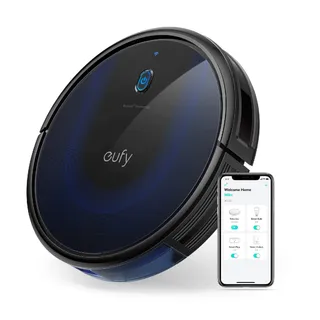
The EufyHome app (now called eufy Clean) earns high marks for polish and stability. Setup is straightforward, and the interface is intuitive enough that you won’t need the manual. Users consistently rate it 5 stars on app stores, which is saying something for a companion app.
Beyond mapping and zone controls, you can schedule cleanings for specific days and times, toggle between four suction levels, enable BoostIQ mode, and adjust mopping water flow. Alexa and Google Assistant integration lets you start, stop, and dock the robot via voice, though you can’t give room-specific commands since the robot doesn’t recognize rooms.
What’s missing from the software side stings a bit. No room-specific scheduling or selective room cleaning. No saved zones or custom area naming. No multi-floor maps. These were limitations at launch, and Eufy never delivered updates to add them despite user requests.
Obstacle Handling
The L70 navigates around furniture, chair legs, and walls with impressive grace. The LiDAR sees large objects approaching and slows down, resulting in gentle contact rather than jarring collisions. Owners praise how it weaves between dining chairs and navigates complex furniture layouts.
Small objects are another story. Cables, socks, toys, and other floor clutter will either get run over, tangled in the brush, or cause the robot to stop with an error. The L70 relies entirely on LiDAR for obstacle detection, and small items sitting at floor level are essentially invisible to it. Some newer robots use AI cameras to recognize and avoid these hazards, but that technology hadn’t trickled down to this price point when the L70 launched.
The practical implication: you still need to pick up the floor before running the robot. Charging cables should be secured or moved. Toys need clearing. And absolutely do not run it if there’s any chance of pet accidents on the floor. The L70 cannot detect them and will create a memorable mess.
Battery and Runtime
The 5200 mAh battery delivers up to 150 minutes on standard power, which is genuinely impressive. Quiet mode on hard floors can stretch this to 3-4 hours. Max suction on carpet shortens it considerably, with some owners reporting 80-100 minutes.
More important than raw runtime is the recharge-and-resume feature. If the battery runs low mid-clean, the L70 returns to the dock, charges up, then navigates back to exactly where it left off. Large homes that exceed single-charge coverage are handled automatically without intervention.
Charging from empty takes 4-5 hours. The battery isn’t easily user-swappable (it’s internal), but replacement packs are available for around $40-50 and can be installed with basic tools when capacity eventually degrades after a few years.
Maintenance
The L70 needs the same routine attention as any robot vacuum. Empty the dustbin after full-home cleanings. Clean the filters weekly by tapping out dust, and wash them periodically (let them dry completely for 24 hours before reinserting). Clear hair from the main brush and side brush weekly. Wipe the cliff sensors and wall sensor monthly. Pop out the caster wheel occasionally to remove hair threads from the axle.
The dustbin design draws occasional complaints. You lift the top lid to remove it, then need to take apart the filter assembly to dump the contents. It’s more involved than robots with simple ejection trays, though the sealed design does keep dust from escaping during operation.
Replacement parts are readily available. Filter packs run around $15-20, main brushes about $15, side brushes under $5 each. Third-party bundles offering multiple brushes and filters for under $30 work fine for most owners.
Known Issues
The L70 has proven remarkably stable, but a few documented issues crop up in owner reports:
The single-map limitation frustrates multi-floor homeowners. Some users hoped firmware updates would add multi-map support, but Eufy never delivered this feature.
Occasional navigation glitches happen, typically resolved by deleting the map and remapping fresh, or performing a factory reset. These seem to be isolated incidents rather than systemic problems.
The dustbin sensor can occasionally throw a false “dust collector not inserted” error after extended use. Cleaning the sensor contacts usually resolves it.
Some users initially struggled with mopping, finding the pad wasn’t getting wet enough. The solution: pre-wet the pad before starting, as the pump maintains moisture rather than soaking a completely dry cloth from scratch.
Who Should Buy This
The L70 makes excellent sense for single-floor homes where you want LiDAR navigation at a bargain price. If you can find one refurbished for $150-200, you’re getting cleaning performance and smart navigation that rivals robots costing twice as much new. Pet owners with shedding animals will appreciate the strong hair pickup.
It’s a harder sell for multi-story homes given the single-map limitation. Buyers who want truly hands-off operation should look at newer models with self-emptying bases and AI obstacle avoidance. And if aggressive mopping is a priority, the L70’s passive cloth drag won’t satisfy.
The Bottom Line
The Eufy RoboVac L70 Hybrid represents that sweet spot where an older flagship becomes an exceptional value. The core cleaning and navigation capabilities remain competitive years after launch. Yes, it lacks features that have become standard on premium robots, but for many households, those absences won’t matter.
At discounted prices, the L70 outperforms similarly-priced new robots that rely on random navigation or inferior sensors. The trade-off is accepting a product that won’t receive new features and lacks some modern conveniences. For budget-conscious buyers willing to make that deal, the L70 delivers reliable, thorough cleaning backed by Eufy’s reputation for solid customer support.