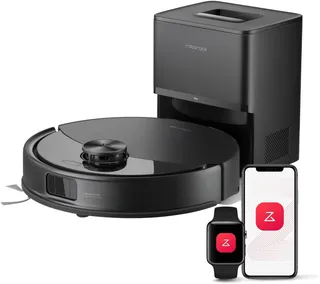
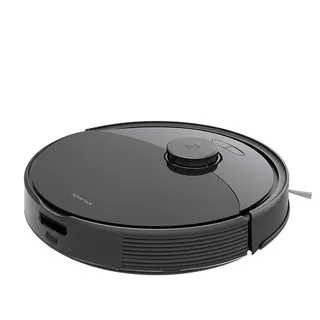
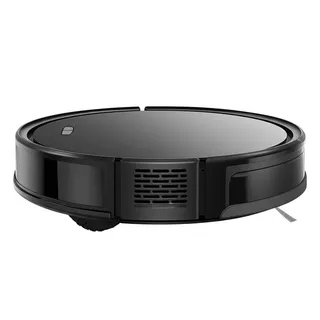
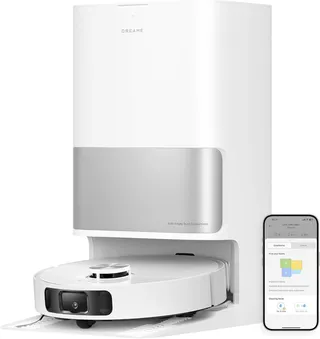
Roborock Q10 X5+
Released 2025
Suction
10,000 Pa
Battery
150 min
Navigation
PreciSense LiDAR
Mopping
Fixed Flat Single Pad (Non-Vibrating)
Full Specifications
| Suction Power | 10,000 Pa |
| Battery Life | 150 min |
| Dustbin Capacity | 350 ml |
| Navigation | PreciSense LiDAR |
| Robot Height | 3.9" |
| Threshold Climbing | 20 mm |
| Brush Roll | Single JawScraper Anti-Tangle |
| Mopping | Fixed Flat Single Pad (Non-Vibrating) |
| Mop Raising Height | 8 mm |
| Self-Empty Dock | Bagged |
| Dock Bag Capacity | 2.7 L |
| Obstacle Avoidance | Yes |
| Multi-Floor Maps | Yes |
| No-Go Zones | Yes |
| Carpet Boost | Yes |
| HEPA Filter | Yes |
| WiFi | 2.4 GHz |
| Voice Assistants | Alexa |
| Warranty | 1 year |
Compare with similar models:
The Roborock Q10 X5 Plus hits a sweet spot that’s hard to find: an auto-empty robot vacuum with genuinely strong suction for under $500. Frequently discounted to $299-$350 during sales, it’s become a popular choice for apartment dwellers and pet owners who want hands-off cleaning without spending $800 or more.
But here’s the thing: this robot has a significant blind spot. Its obstacle avoidance scored just 6 out of 24 in Vacuum Wars testing, well below the 16.6 average. If your home has cables on the floor, scattered toys, or low-profile obstacles, you’ll need to do some prep work before each cleaning session.
What Makes It Stand Out
Hair Removal That Actually Works
Pet owners, pay attention. The Q10 X5 Plus achieved 100% hair removal in testing, obliterating the industry average of 62%. The JawScrapers comb brush prevents tangles rather than just tolerating them. Long hair, short hair, human hair, pet hair, it handles all of it without wrapping around the roller and requiring manual extraction.
Suction That Competes Above Its Price
At 10,000 Pa, the Q10 X5 Plus matches robots costing $200-$300 more. That’s enough power to handle fine dust, sand, cereal crumbs, and pet litter without breaking a sweat. Hard floors get thoroughly cleaned in a single pass. Low to medium-pile carpet performs well too, though high-pile carpets will challenge it.
The Auto-Empty Dock
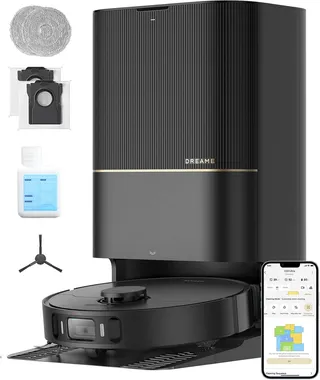
The Plus model includes an auto-empty station with a 2.7L bagged system. Bags last roughly seven weeks under typical use, costing about $5 each. The dock itself is compact at 8.3” x 7.0” x 10.2”, fitting easily in a corner.
Fair warning: the auto-empty process sounds like a jet engine. Users consistently describe it as very loud. If you’re running the vacuum during work-from-home calls, schedule emptying for when you’re away.
Navigation and Mapping
PreciSense LiDAR handles the navigation, scanning 360 degrees to build accurate floor maps. The robot works perfectly in complete darkness since LiDAR doesn’t need ambient light. It also won’t get confused by mirrors or reflective surfaces.
The app supports up to four floor maps, room-specific scheduling, no-go zones, and 3D visualization. Initial mapping typically completes in a single run, with full optimization after two or three sessions.
One frustration that pops up in user reviews: map saving can be flaky after firmware updates. Some users report having to rebuild maps periodically, which Roborock hasn’t fully resolved.
The Mopping Reality Check
The X5 variant includes a fixed flat mop pad. Not vibrating, not rotating, just a microfiber cloth that drags behind the vacuum. It lifts 8mm when the robot detects carpet, preventing wet damage to rugs.
Here’s what Roborock doesn’t emphasize in marketing: you need to pre-wet the mop pad before every mopping session. The onboard water pump can’t fully saturate the pad from dry. Skip this step and you’re just smearing rather than cleaning.
The robot uses 50% less water than average during mopping, which sounds efficient but also means lighter cleaning. For maintenance mopping between deeper manual cleanings, it’s adequate. For actual floor cleaning with stuck-on grime, you’ll want something with more aggressive mopping action.
Three water flow levels give you some control. Mopping-only and vacuum-only modes are both available, along with combined single-pass cleaning.
Where It Struggles
Obstacle Avoidance is Weak
The structured light sensors (Reactive Tech) represent the biggest compromise at this price point. The robot will run over thin cables, small toys, socks, and anything it can’t clearly see. Pet bowls get hit depending on their size and color. Shoes with low profiles often get bumped.
The solution is environmental: pick up obstacles before cleaning or set no-go zones around problem areas. If you have young kids or a home with perpetual floor clutter, budget models with cameras and AI-based avoidance exist for similar money.
Voice Control is Limited
Alexa and Google Home integration exists but don’t expect much. You get start, stop, and return-to-dock commands. Room-specific cleaning via voice doesn’t work reliably despite some marketing suggestions. No custom routines, no automation chains. The Q10 series specifically lacks these features compared to older Q7 models, which appears to be an intentional product differentiation, not a bug.
High-Pile Carpet Performance
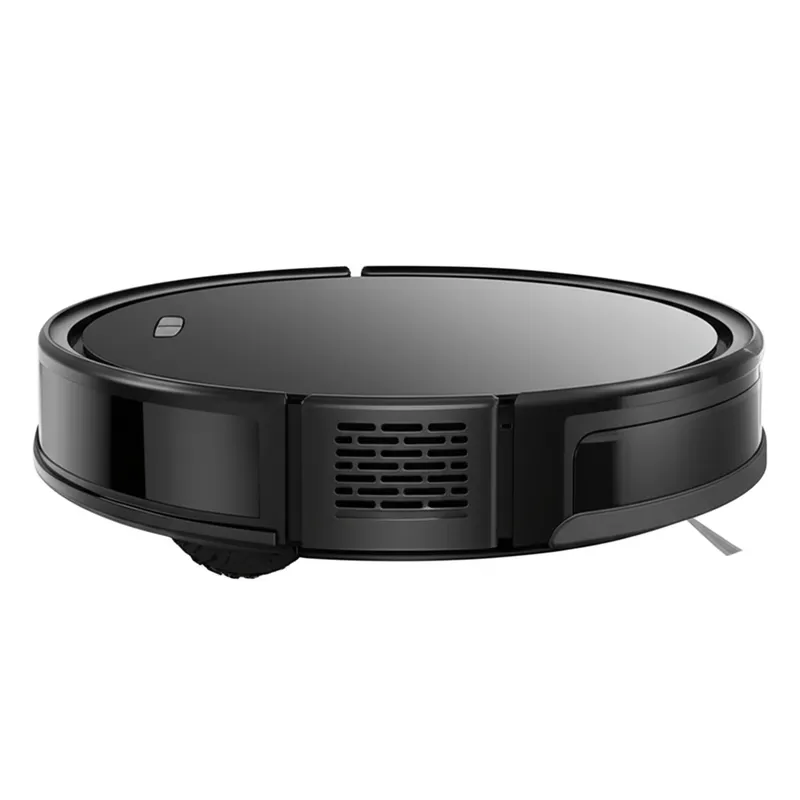
At 3.9 inches tall, the robot can slide under most furniture. But that height also limits deep fiber penetration on plush carpets. If your home has carpet taller than two inches, expect fair-to-good rather than excellent results.
Technical Specifications
Robot Dimensions: 13.9” x 13.9” x 3.9” (353 x 353 x 99 mm)
Weight: 14.8 lbs robot only, 22.05 lbs total with dock
Battery: 5200 mAh lithium-ion providing 150 minutes advertised runtime. Real-world results vary from 60-150 minutes depending on suction level and floor type. Coverage reaches approximately 1,243 square feet per charge.
Dustbin: 350 ml internal combo bin for dust and water
Filter: Washable HEPA, with manufacturer recommending replacement every 150-180 hours (users often stretch this to 6-12 months with regular washing)
Threshold Crossing: 20mm (about 0.8 inches)
WiFi: 2.4 GHz only, no 5 GHz support
The App Experience
The Roborock app scores 4.7 stars on both iOS and Android with over 302,000 reviews. Setup takes 5-10 minutes for WiFi connection and initial mapping.
Common complaints include reconnection issues (roughly 30% of users report having to reconnect every third use), login persistence problems, and occasional crashes after updates. When it works, the app is responsive with real-time map tracking showing exactly where the robot is cleaning.
Room editing, no-go zones (up to 10), invisible walls, and per-room suction settings are all available. Scheduling works on hourly, daily, or weekly intervals. Off-peak charging lets you schedule power-up during cheaper electricity hours.
Maintenance Costs
Annual estimate: $250-$280 for typical use, up to $400+ for heavy mopping
Breaking that down:
- Dust bags: $30-$40 per year (6-8 bags at approximately $5 each)
- Filters: $15-$30 per year (1-2 replacements at $15-$30)
- Side brushes: $8-$10 per year (as needed)
- Mop pads: This is where costs add up. At $16 for a 2-pack and replacements every 2-3 weeks with regular use, heavy moppers can spend $200+ annually
Tool-free brush removal makes maintenance simple. The comb teeth help prevent wrapping, so you’re not spending ten minutes with scissors after every cleaning cycle.
Warranty and Support
Roborock offers one year of standard warranty covering manufacturing defects and hardware failures. Wear items like filters, mop pads, and brushes aren’t covered, nor is water damage.
Extended warranties of 1-2 additional years run $95-$130.
Support quality is mixed. Phone support reaches someone quickly (under one minute average hold, seven minute average call). Email response times range from three hours to several days. Customer satisfaction ratings are concerning: PissedConsumer shows 1.8/5 with only 13% of callers reporting issues resolved.
Multiple users report warranty claims denied for “liquid infiltration” on mopping models, which creates an awkward situation for a product designed to mop. Keep purchase receipts and document any issues carefully.
Who Should Buy This
Good fit:
- Apartment dwellers and small home owners (under 2,000 square feet)
- Pet owners prioritizing hair removal
- Hard floor homes with minimal carpet
- Budget-conscious buyers wanting auto-empty functionality
- People willing to “robot-proof” their space before cleaning
Not a good fit:
- Homes with extensive high-pile carpet
- Cluttered spaces with cables, toys, or obstacles
- Anyone wanting automated, hands-off mopping
- Privacy-conscious users (cloud connection required for all functions)
- People who need reliable voice control automation
The Bottom Line
The Roborock Q10 X5 Plus delivers strong suction, excellent hair removal, and auto-empty convenience at a price that undercuts most competition. At sale prices of $299-$350, it represents genuine value for the right household.
The trade-offs are real, though. Poor obstacle avoidance means you’re picking things up before the robot runs. The mopping function is basic and requires manual prep. Voice control is barely functional. Support experiences vary wildly.
For a hard-floor apartment or small house with manageable obstacles and pets, this robot earns its place on the Vacuum Wars Top 20 list at #20. For anything more demanding, spending another $200-$300 on models with better obstacle avoidance and mopping systems will save frustration.