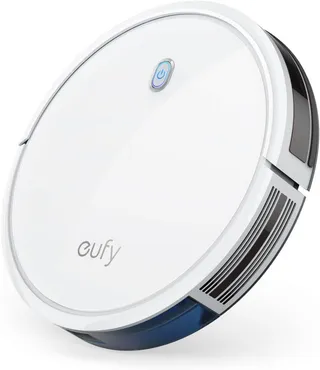
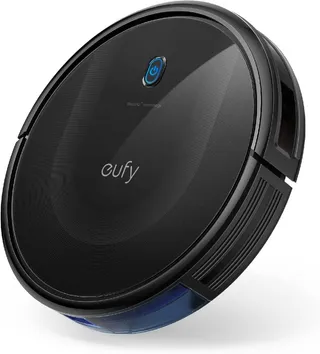
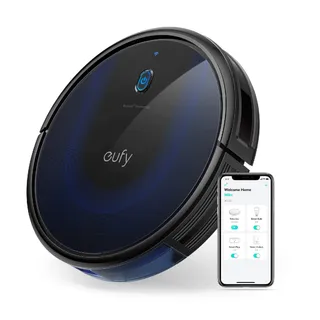
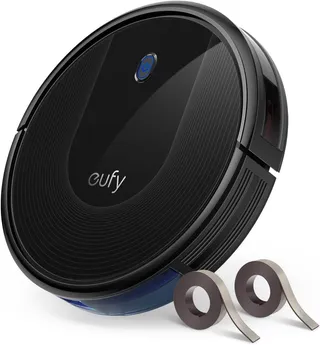
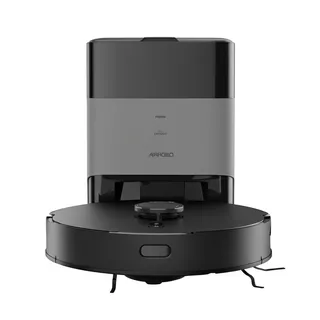
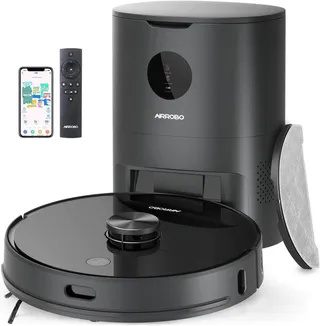
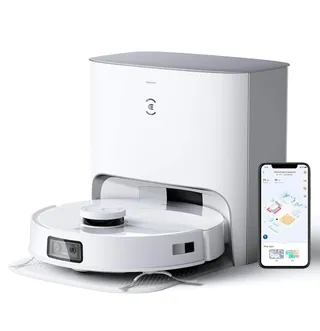
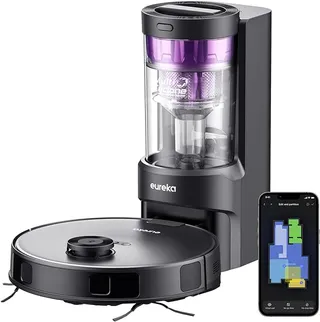
Eufy G40+
Suction
2,500 Pa
Battery
100 min
Navigation
Gyroscope & Floor Tracking
Full Specifications
| Suction Power | 2,500 Pa |
| Battery Life | 100 min |
| Dustbin Capacity | 420 ml |
| Navigation | Gyroscope & Floor Tracking |
| Robot Height | 2.85" |
| Threshold Climbing | 20 mm |
| Brush Roll | Single |
| Mopping | No |
| Self-Empty Dock | Bagged |
| Dock Bag Capacity | 3.2 L |
| Obstacle Avoidance | No |
| Carpet Boost | Yes |
| HEPA Filter | Yes |
| WiFi | 2.4 GHz |
| Voice Assistants | Alexa |
| Warranty | 1 year |
Compare with similar models:
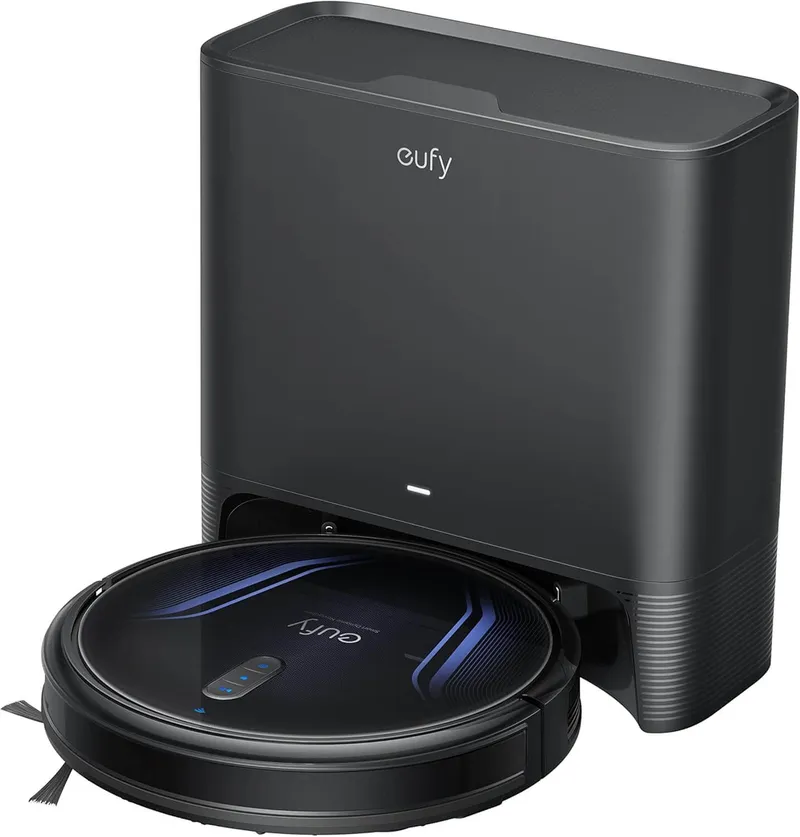
At just 2.85 inches tall, the Eufy G40+ slips under furniture that sends bulkier robot vacuums into retreat. That slim profile, combined with a self-emptying dock and 2,500 Pa of suction, makes this one of the more compelling budget robot vacuums on the market. It won’t map your home or let you draw no-go zones, but for anyone tired of emptying dustbins every few days, the G40+ delivers genuine convenience at a reasonable price.
What You’re Getting
The G40+ launched in September 2022 with an MSRP of $479.99, though frequent discounts brought it down to around $329 at launch. Today, expect to pay $350-$400 depending on the retailer and current promotions.
Two main variants exist: the G40+ (vacuum with self-empty base) and the G40 Hybrid+ (adds mopping capability for about $20 more). Both share identical vacuum performance. You can also find base-less versions that work with a separately purchased dock.
The robot measures 12.8 inches in diameter and weighs about 10.4 lbs with the base included. That 2.85-inch height deserves emphasis: it’s genuinely low. Most LiDAR-equipped robots stand 4+ inches tall, which means the G40+ can clean under beds, couches, and toe-kicks where competitors simply can’t reach.
Build quality feels solid despite the affordable price point. The black, low-gloss finish resists fingerprints, and users consistently describe the construction as sturdy rather than cheap.
Hardware Under the Hood
Suction and Airflow: The 2,500 Pa maximum suction matches robots costing significantly more. Some third-party listings incorrectly advertise 18,000 Pa, but that figure has no basis in reality. Independent testing confirms the 2,500 Pa spec delivers genuinely strong suction for its class.
Brushes: A single roller brush combines bristles and rubber fins in a standard horizontal design. The brush guard incorporates comb teeth that help strip hair away, reducing tangles. One side brush handles edge sweeping. While single side brush robots sometimes get criticized for missed edges, the G40+‘s end-of-cycle perimeter sweep compensates well.
Dustbin: The vacuum-only model holds 420 ml, while the Hybrid+ shrinks to 250 ml to accommodate the water tank. Neither capacity matters much in practice since the auto-empty station clears the bin after each run anyway.
Filtration: Triple-layer filtration (including a HEPA-style filter) traps 99.9% of dust and allergens according to Eufy. The auto-empty station adds its own triple-filter design, and users report clean exhaust air with no noticeable dust escape.
Battery: A 2,600 mAh lithium-ion battery provides up to 100 minutes on standard suction. That’s the ideal-conditions number, though. On high power or thick carpet, expect 40-60 minutes. Running max suction continuously on plush carpet can drain the battery in as little as 30 minutes. When power runs low, the robot returns to charge and resumes where it left off.
How It Navigates
The G40+ uses gyroscope-based navigation rather than LiDAR or camera systems. It creates a temporary map during each cleaning session, driving in systematic zigzag rows rather than bouncing randomly. The map vanishes once cleaning ends.
This approach has trade-offs. You can’t save floor plans, create virtual barriers, or select specific rooms to clean. The robot treats every session as a fresh start. On the plus side, gyro navigation is surprisingly effective at covering space systematically. Vacuum Wars found the G40+ navigating “nearly all areas in a logical way” without missing spots in typical home layouts.
The robot relies on bump sensors and infrared for obstacle detection. It will gently nudge into furniture before turning away. Cliff sensors prevent stair tumbles, though they can be fooled by very dark flooring, which registers as a drop. Black or navy rugs may cause the robot to hesitate or refuse to cross.
Four suction levels are available through the app: Quiet, Standard, Turbo, and Max. Carpet Boost automatically kicks the suction to maximum when transitioning onto rugs. Noise runs about 55 dB in Quiet mode (comparable to a fan) and 65-67 dB at maximum.
Mopping on the G40 Hybrid+
If you opt for the Hybrid+ model, you get a 2-in-1 vacuum and mop. The mopping system is basic: a static wet pad drags behind the robot as it moves. No spinning rotors, no vibration, no down-force beyond the robot’s weight.
The 130 ml water tank covers roughly 400-500 square feet per fill on moderate settings. Eufy includes one washable microfiber pad plus five disposable wet wipes.
Set realistic expectations here. This mop handles light dust and footprints on already-clean floors. It won’t scrub dried spills or tackle sticky residue. Eufy explicitly recommends vacuuming 2-3 times before mopping and notes the system is for maintenance, not deep cleaning.
The Hybrid+ cannot lift its mop pad when transitioning to carpet. If you have mixed flooring, you’ll need to either close doors, use magnetic boundary strips (sold separately), or remove rugs during mop runs. Forgetting this step means damp carpet edges.
The App Experience
The Eufy Clean app provides remote control, scheduling, and settings adjustment over Wi-Fi. You can start/stop cleaning, adjust suction levels, change water flow on the Hybrid+, and set cleaning schedules.
What you won’t find: saved maps, room selection, no-go zones, or virtual barriers. The app shows a temporary map during cleaning, but it disappears afterward. If you need to block areas, you’re limited to closing doors or using physical magnetic strips.
The robot works with Amazon Alexa and Google Assistant for basic voice commands (start, stop, return to dock). Apple HomeKit and Matter aren’t supported.
Wi-Fi setup requires a 2.4 GHz connection. Some early buyers experienced connectivity issues, but Eufy released firmware updates that resolved most problems. Once connected, the system stays reliable.
The Self-Emptying Dock
The dock serves two purposes: charging and automatically emptying debris into a disposable bag. When the robot finishes cleaning, it drives onto the dock’s ramp. The base’s vacuum motor sucks debris through a port in about 10 seconds. It’s loud during those 10 seconds, roughly 80 dB, but mercifully brief.
The bag holds approximately 2.5-3.2 liters, enough for about 60 days of debris under average use. When full, a sensor triggers an LED indicator and app notification. Replacing bags is simple: open the top lid, pull out the old bag (it auto-seals), and slide in a new one.
Through the app, you can adjust emptying frequency to every 1, 2, or 3 cleaning cycles. This helps extend bag life if your home generates minimal dust.
Eufy includes two bags in the package. Official replacement packs run about $17 for three bags; third-party options cost roughly half that and work fine according to user reports. Annual bag cost runs $15-35 depending on your choices.
The dock also includes a handy storage compartment inside for spare bags and accessories.
Accessories and Ongoing Costs
In the box: Robot, self-empty station with power cord, 2 dust bags, 1 extra filter, 1 extra side brush, cleaning tool, 5 cable ties, waterproof dock mat, and manuals. The Hybrid+ adds the water tank module, 1 washable cloth, and disposable mop cloths.
Replacement schedule: Eufy suggests filters every 2-3 months, side brush every 3-6 months, main brush every 6-12 months. Real-world longevity often exceeds these recommendations if wear is minimal.
Annual costs with official parts: About $60 (bags, filters, brushes). Using third-party alternatives drops this to roughly $25.
Battery replacement: Expect to swap the battery after 2-3 years of daily use. Eufy sells compatible packs for $30-40, and the replacement process involves just a few screws.
Third-party parts are widely available and generally work well. The G40 shares many components with the G30/G35 series, expanding your options.
Maintenance and Longevity
Daily upkeep barely exists thanks to the auto-empty function. Weekly tasks include tapping dust off the filter and checking the brush for hair tangles. The included cleaning tool with a cutting blade makes hair removal quick. Monthly, wipe the cliff sensors and charging contacts with a dry cloth.
The G40+ builds on Eufy’s proven slim-robot design. Similar models like the 11S and 30C have run 4-5 years with proper care, and nothing about the G40’s construction suggests shorter longevity. The absence of fragile LiDAR periscopes actually eliminates one common failure point.
If wheel motors or other components eventually fail, Eufy provides replacement guides and sells parts. The modular design with screws and connectors (rather than soldering) makes repairs feasible for anyone comfortable with basic tools.
Warranty and Support
Eufy provides a 12-month warranty covering manufacturing defects under normal use. Battery coverage typically runs the full year as well.
Support channels include phone (+1-800-994-3056 for US), email ([email protected]), live chat, and an active community forum. Eufy’s parent company Anker has built a solid reputation for customer service. Warranty claims usually move quickly, often resulting in replacement units rather than lengthy repair processes.
Multiple users report receiving upgraded replacement models when their G40+ needed warranty service and stock was unavailable. That kind of customer care builds loyalty.
Real-World Cleaning Performance
Surface debris: Excellent results on both hard floors and carpets. The G40+ consistently collects everything from fine dust to large crumbs in one pass. Vacuum Wars awarded it an 8.6/10 performance score.
Deep carpet cleaning: This is where the G40+ shows its budget roots. In standardized testing, it removed about 69% of embedded sand from medium-pile carpet, versus 75% average across all robots tested. The 2,500 Pa suction and single brushroll handle surface debris beautifully but don’t agitate deep into carpet fibers as aggressively as heavier dual-brush competitors.
Edge cleaning: Standard round-robot limitations apply. The side brush pulls debris from baseboards effectively during the end-of-cycle perimeter sweep. True 90-degree corners may retain a small triangle of dust, which is unavoidable physics for circular robots.
Navigation efficiency: The methodical zigzag pattern covers 95%+ of accessible floor space without obvious misses. It’s slower than LiDAR robots at mapping complex layouts, but faster than random-bounce vacuums. A 500 square foot area takes roughly 45 minutes.
Self-emptying performance: The dock pulls out approximately 97% of debris per cycle, including pet hair tumbleweeds. No clogs reported in independent testing. Users rarely need to manually empty the robot’s bin.
Pet Owner Considerations
The G40+ handles pet hair effectively. The brushroll picks up fur from both hard floors and carpet, and the self-empty dock means you’re not constantly handling fur-filled dustbins. Eufy’s bag system keeps dander sealed away, a genuine benefit for allergy sufferers.
The anti-tangle brush guard reduces hair wrap, though after several runs you may notice a band of hair around the brush ends. Weekly cleaning with the included tool takes about 30 seconds.
The critical warning: This robot cannot detect or avoid pet waste. No AI cameras, no poop recognition. If your pet has an accident and the G40+ rolls through it, you’ll have a disaster on your hands. Only run this robot when you’re confident the floors are clear. For households with unreliable pets, consider the Roomba j7 series, which specifically addresses this problem (at a higher price point).
Pet bowls are another consideration. Heavy ceramic bowls stay put when bumped. Lightweight plastic bowls may get shoved across the floor. Either elevate your pet’s dishes or block that area during cleaning.
Most cats and dogs tolerate the G40+ better than traditional vacuums thanks to its quieter operation. After a few sessions, many pets learn to simply walk away when it approaches.
Who Should Buy the G40+
Ideal scenarios:
- Small to medium homes (under 1,200 square feet) where the battery can finish in one cycle
- Homes with lots of low furniture that taller robots can’t reach
- Pet owners wanting hands-off daily hair cleanup (assuming no frequent accidents)
- Anyone upgrading from a random-bounce robot who wants systematic cleaning
- Budget-conscious shoppers who value auto-empty convenience over smart mapping
- People who prefer set-and-forget simplicity over app-based micromanagement
Less ideal scenarios:
- Large multi-floor homes needing room selection and multi-map storage
- Households with many floor obstacles that can’t be picked up before cleaning
- Deep carpet enthusiasts needing maximum extraction power
- Tech-forward users wanting smart home integration beyond basic voice control
- Anyone whose pets have unpredictable bathroom habits
How It Compares
Vs. Roomba i3+: Both are entry-level auto-empty robots priced similarly. The Roomba offers dual rubber brushrolls (better for hair) and iRobot’s proven durability. The G40+ counters with mopping capability (Hybrid+ model), a slimmer profile, quieter operation, and arguably stronger suction on hard floors. Neither has smart mapping or obstacle avoidance AI.
Vs. Roborock Q5+ and similar: These cost $100-200 more but add LiDAR mapping, no-go zones, and multi-floor memory. For buyers who need those features, the extra investment makes sense. For those who don’t, the G40+ delivers most of the cleaning power at a lower price.
Vs. older Eufy models: If you’re upgrading from an 11S, 30C, or similar bounce-navigation robot, the G40+ represents a dramatic improvement. Systematic cleaning, self-emptying, and higher suction make daily use far more convenient.
Known Limitations
Worth acknowledging the G40+‘s weak points:
-
No persistent mapping: You can’t save floor plans, create no-go zones, or select specific rooms. Physical barriers or closed doors are your only options.
-
Dark floor problems: The IR cliff sensors treat very dark or black flooring as a drop-off. The robot may refuse to clean black rugs or carpets.
-
No obstacle AI: Cables, socks, and pet waste will get run over or tangled. Prep your floors before cleaning.
-
Battery life varies dramatically: The 100-minute spec assumes ideal conditions. High power on thick carpet can drain the battery in 30-40 minutes.
-
Basic mopping only: The Hybrid+ wipes, it doesn’t scrub. Dried spills need manual attention.
-
Loud emptying cycle: That 10-second dock suction hits 80+ dB. Brief but startling if unexpected.
The Bottom Line
Vacuum Wars called the G40+ “the best budget auto-empty vacuum,” and that assessment holds up. For $350-400, you get genuine cleaning power, systematic navigation, a self-emptying dock, and that uniquely slim profile. You give up smart mapping, obstacle avoidance AI, and deep-carpet prowess.
If your home is under 1,200 square feet, you’re willing to prep floors before runs, and you value the convenience of hands-off daily cleaning over app-based room control, the G40+ makes a compelling case. It won’t revolutionize robot vacuums, but it delivers real convenience at a price that doesn’t require much justification.